
The Fifth Drawer

My father never talked about the war to my mother, his friends, or to us. He served as a tank commander in the 7th Armored Division, fought from Belgium to the Baltic Sea, earned a Silver Star and a Purple Heart, and came home saying almost nothing about any of it for fifty years.
I used to think that was unusual, but I have come to understand it was the most ordinary thing about his generation.
There is a Netflix film called Number 24 about Gunnar Sønsteby, one of the most decorated members of the Norwegian resistance. Sønsteby spent the war years doing things no person should have to do. He identified Nazi collaborators, organized sabotage operations, and in some cases was responsible for deciding who lived and who did not. After the war, he went home and built a life.
In the film, he describes his memories as being organized like a dresser with five drawers. The top three contained the things he thought about and talked about freely, the fourth held things he would rarely visit, and the fifth was sealed shut with a label that read: “Not opened since May 8, 1945,” the day the war in Europe ended.
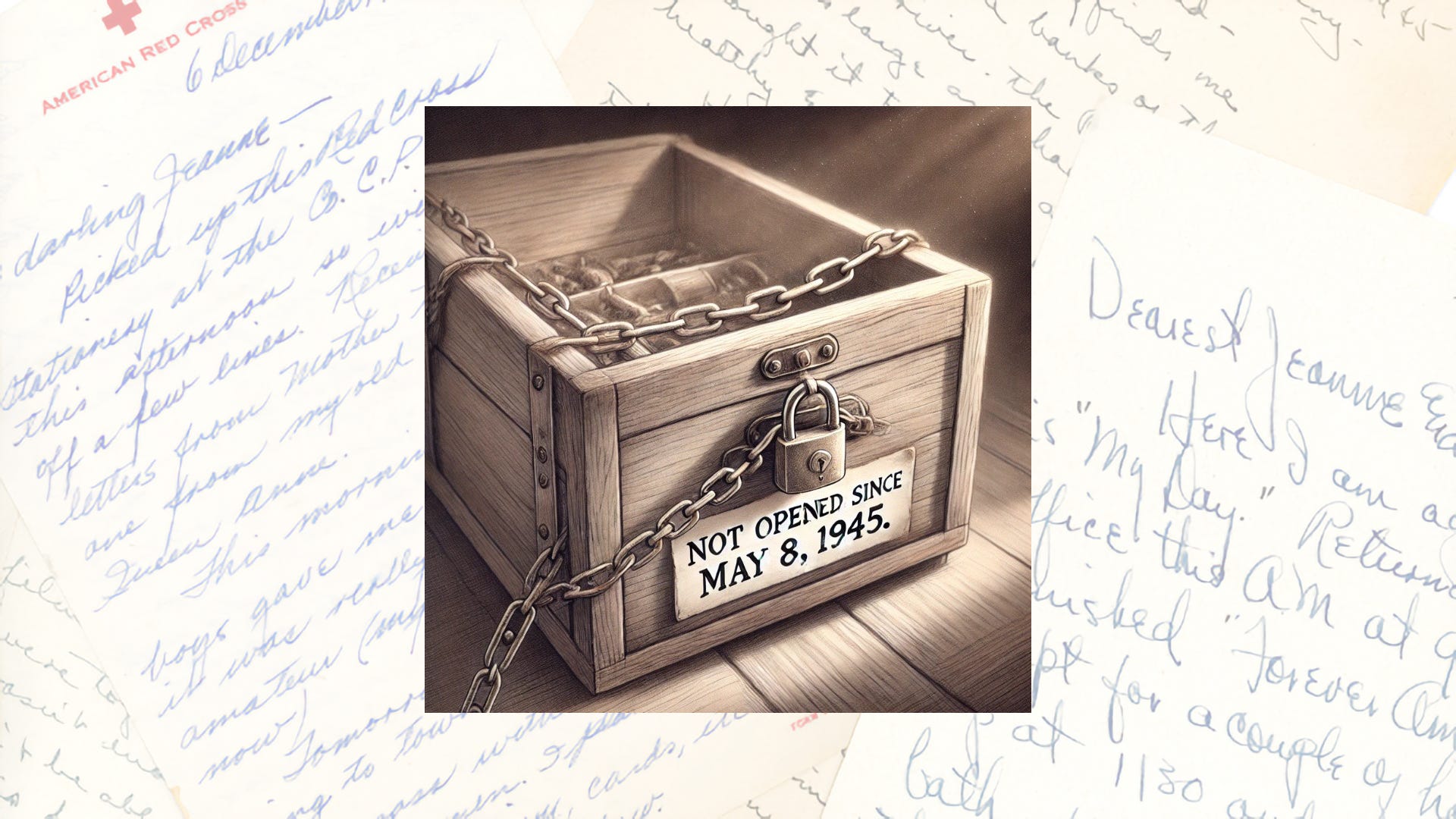
When I heard that, I gained insight into my father that I had never been able to put into words. He had a fifth drawer too, and so did every man who came home from that war.
What we forget is that these men did not come home to a world that was waiting to hear what they had been through; they came home to a world that needed them to get on with it. The war economy was shifting to a peace economy, jobs had to be found, marriages that had been interrupted by years of separation had to be rebuilt, and babies born while they were overseas had to be raised.
The term we would use today is PTSD, but that diagnosis did not exist until 1980. For thirty-five years, these men lived with memories they tried to forget and did not want to discuss. They went to work, built houses, raised families, joined churches and civic organizations, and poured themselves into their communities. My father helped raise funds for a new church sanctuary and played a role in building a children’s hospital in Seattle. That was how his generation processed what they had seen; they built things.
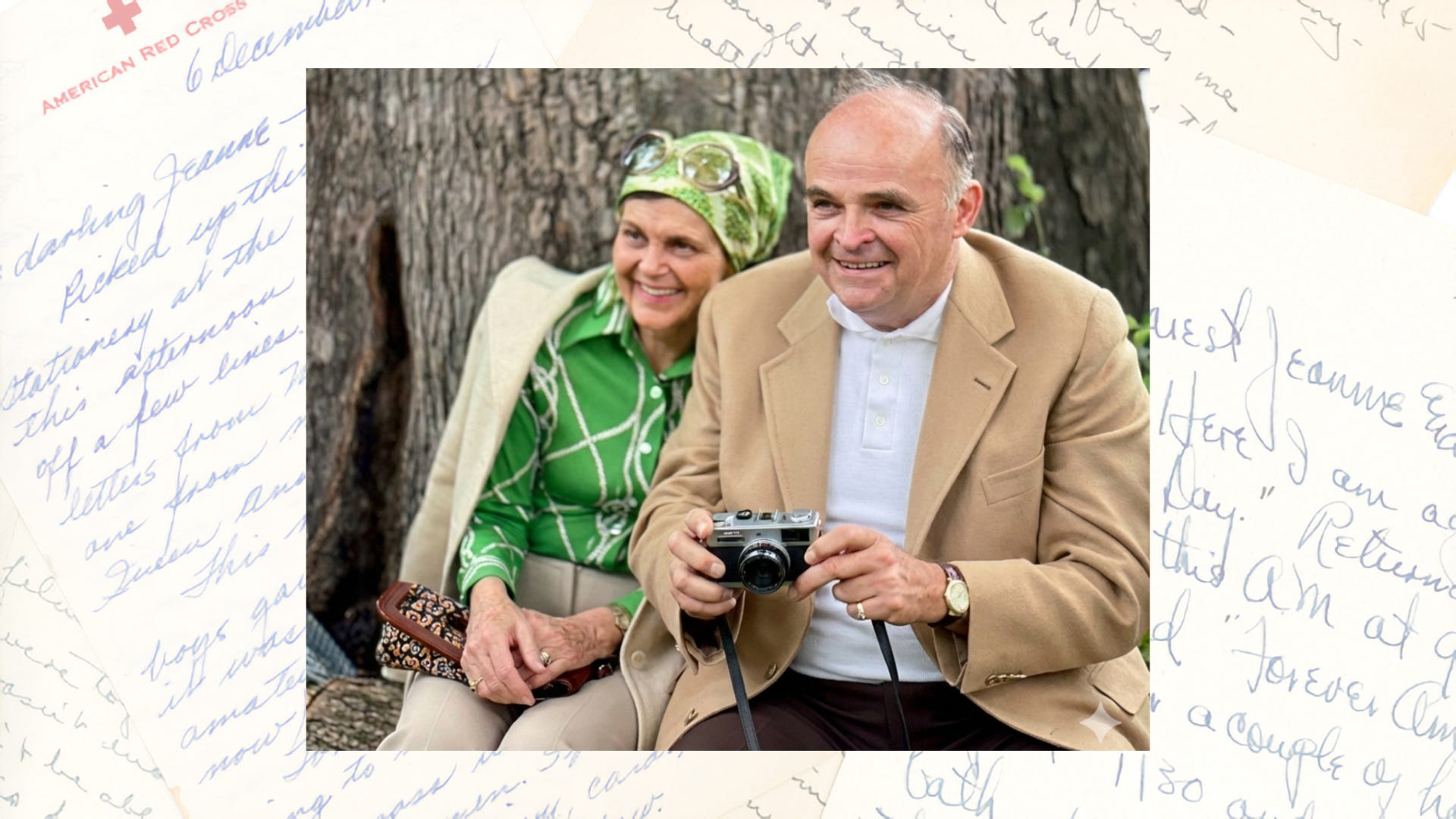
But the silence was always there.
I always wondered what my father told other people about the war, and the answer came from one of his closest friends, John Bohlinger. John and his wife became wonderful family friends over many years. My parents would visit them in New York, in Montana, in Mexico. There were long evenings, good meals, plenty to drink, and they talked about everything.
After my father died, I asked John what Dad had shared with him about his military service. John’s answer was simple. John had been a Marine officer. All he knew was that my father had been a tank commander and had served in Europe during World War II. Decades of friendship, and the fifth drawer never opened.
John later read the book and wrote me a letter. He called my father a real war hero, the kind of person he would follow into combat. But in all those years of friendship, he had never heard a single story.
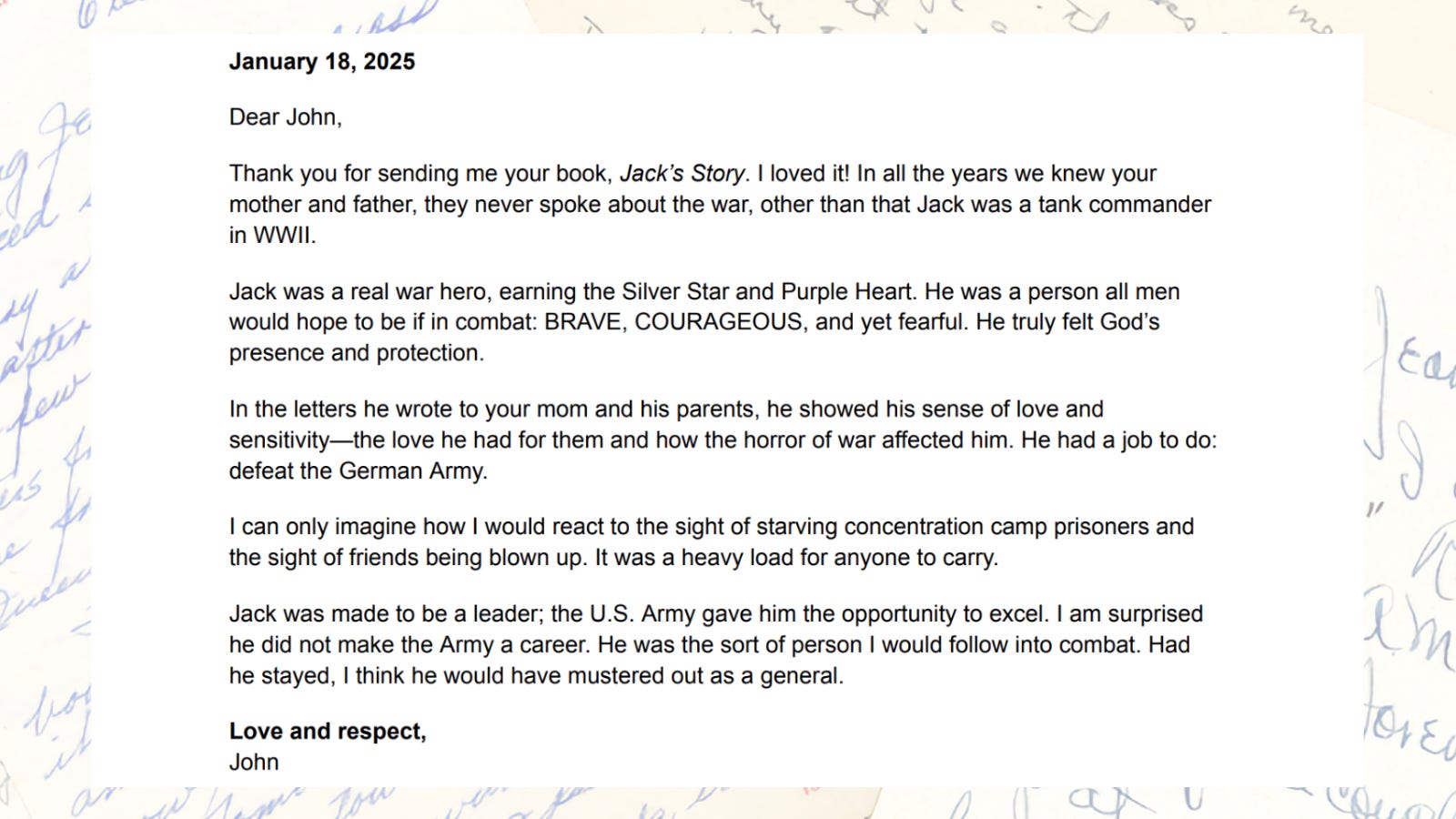
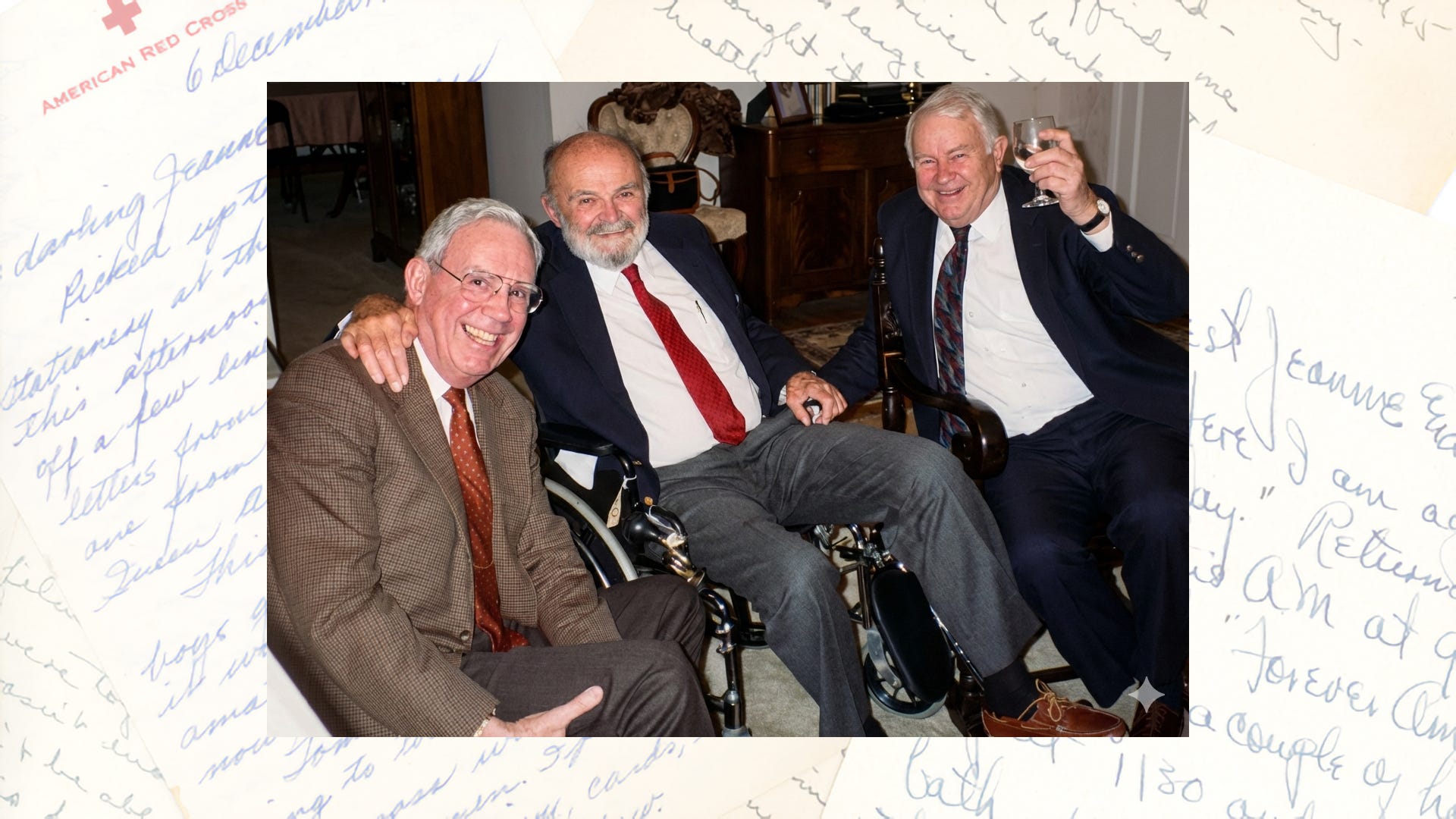
I saw the silence myself once, in a way I did not fully understand at the time. I was visiting my father-in-law, Colin, at his home in New York, and stopped by with my father. Colin’s business partner, Henry Curran, was there, and the drinks were flowing. At some point, my father and Henry realized they had both been at Fort Knox as young officers training in armor, and the conversation came alive.
They talked about the friends they had known, the different armored units those friends had joined, and where they had been assigned in the European Theater. They were animated, laughing, filling in gaps for each other, and it was the most I had ever heard my father say about anything connected to the war.
But not once did either talk about what happened after the training ended. Not once did they mention combat, or fear, or loss, or any of the things that must have defined those years for both of them. They stayed in the top three drawers, touched upon the fourth, and the fifth remained closed.
I believe my father talked to his old Army friends about some of it, because when men who have shared the same experience are together, there is an understanding that does not require explanation. But I doubt they ever dwelt on the worst of it. The memories that kept them awake at night, the friends who did not come home, the things they had to do and could never undo, all stayed locked away.
It was not until 1994, on the 50th anniversary of D-Day, that I wrote my father a letter telling him I had been thinking about what his generation went through, and that while I could never fully understand, I wanted him to know he would always be a hero to me.
That letter, he told me, opened a door he had kept closed for half a century.
The following year, with the encouragement of his lifelong friend Frank Taylor, he sat down and wrote a brief account of his experiences between November 1944 and May 1945. It was factual and spare, but it was also the first time he had put any of it into words, and he was seventy-four years old.
The fifth drawer, after fifty years, had finally opened. Not all the way, but enough.
I think about that sometimes when I read his letters from 1944 and 1945. The young man writing home about movies and puppies and missing his wife was the same man who had watched friends die, who had fought for five hours with shrapnel in his arm, who had walked past bodies stacked like cordwood outside an aid station. He wrote about the first things and never wrote about the second.
That silence was not weakness. It was how they survived, and for most of them, it lasted a lifetime.
What stories did your family carry home from the war?
The full story: Jack’s Story on Amazon