
The Burning House
April 5, 1945

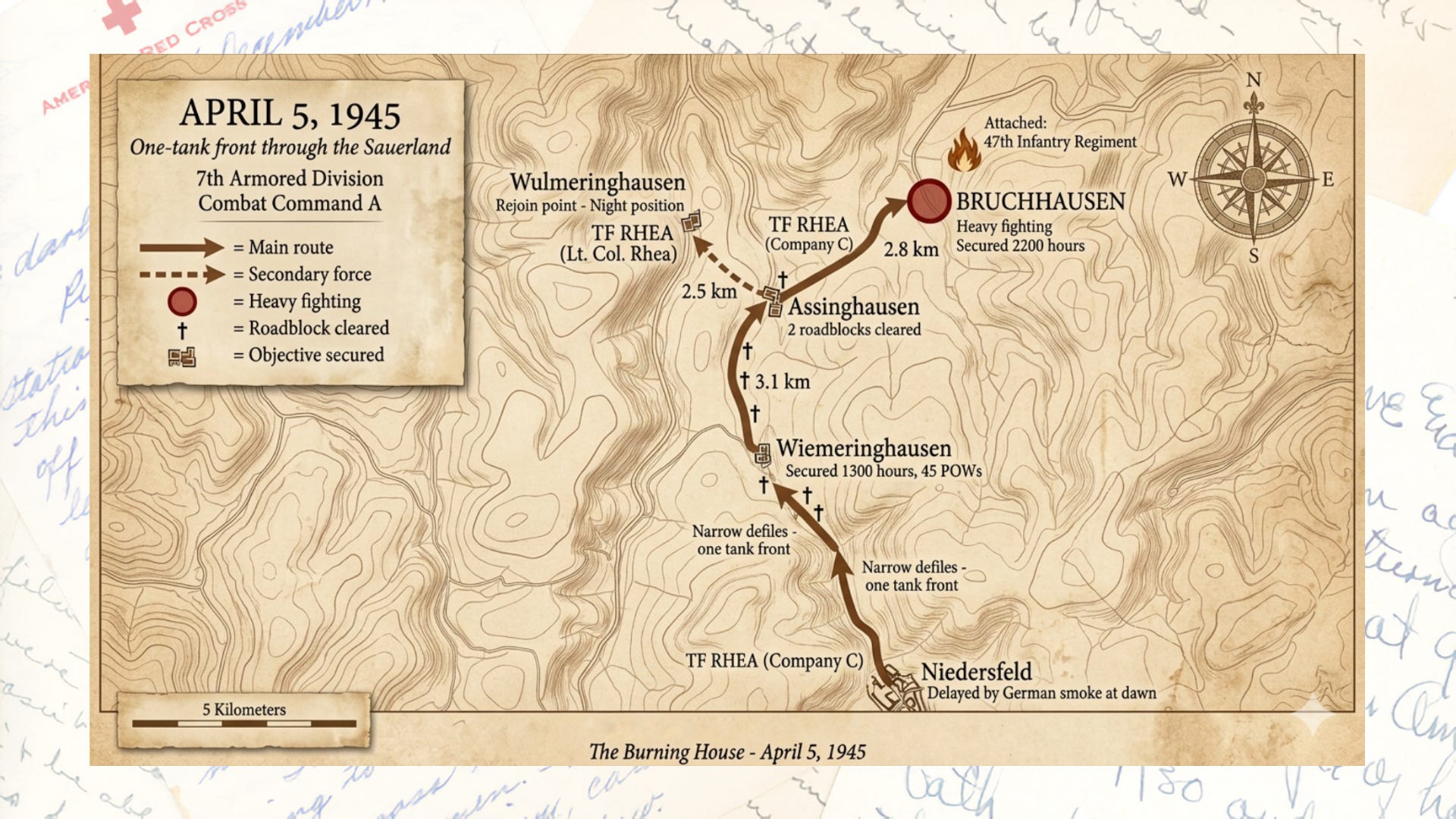
The smoke came at dawn. The Germans had flooded the valley during the night with smoke to delay the attack, and Jack sat in his tank at the head of Company C watching the gray haze hang thick across the approach to Wiemeringhausen. Behind him, the rest of Task Force Rhea waited with engines idling. Somewhere to the left and right, the other two task forces of Combat Command A were waiting too, all of them stalled before they could even begin.
When the smoke finally lifted and they moved out, the day became a slow battering through country that funneled them into narrow passes where only one Sherman could move at a time. The ridges rose on both sides. The Germans defended everything: roads, stream crossings, the approaches to every town, using artillery and self-propelled guns firing from positions Jack couldn’t see and couldn’t reach.
It was the kind of fighting where you sent a tank forward with infantry aboard to probe a roadblock, then put the doughs on foot to close with the enemy while machine gun fire came from ahead. Most of the time, they cleared it. The engineers would bring up a dozer blade to push the wreckage aside, and the column would move forward again. A few miles later, there would be another one.
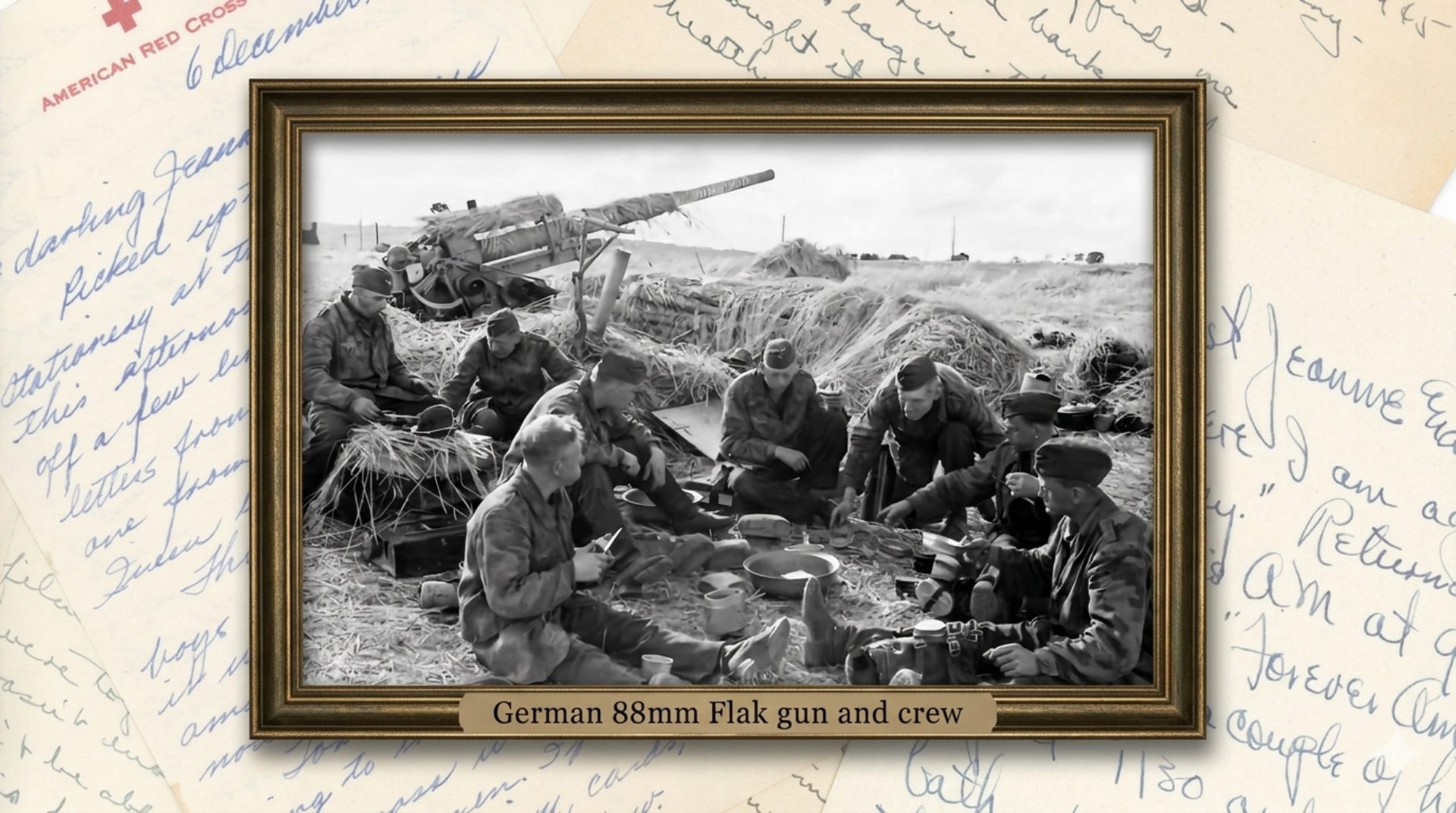
At Wiemeringhausen, the roadblock was larger, supported by anti-tank guns, mortars, and flak guns. The ground was flat enough that Jack could maneuver his platoons to the left and right while the Shermans worked over the German positions with their 75s. After fifteen minutes, the obstacle was gone, and they pushed into the town to find forty-five Germans waiting to surrender.
They kept moving north. Two more roadblocks before Assinghausen, both cleared without much trouble. When they reached the town, Jack found a small group of Waffen SS surrounded and waiting for him. He was surprised at how quickly they gave up, these men whose reputation had preceded them through every kilometer of the war. He confronted their officer and told him to surrender. The man pulled his sidearm instead. Jack killed him, and the rest went to the POW cages.
Lieutenant Colonel Rhea split the task force after that. He would take Wulmeringhausen with half the column. Jack would take Bruchhausen with the other half and an attached infantry company from the 47th.
The terrain around Bruchhausen was stubborn, the kind that wouldn’t let you attack straight in. Jack brought his tanks west, then north and back east to approach the town from the main road. When they crested the hill and started south, the anti-tank fire came immediately. One of his Shermans went down before he could pull the others back into cover.
He put forward observers on the crest to call out gun positions while German artillery hammered their position. His tanks fired back with high-explosive rounds at targets they mostly couldn’t see. When the infantry from the 47th was finally in position, they went in together with artillery and tank fire, pinning down whatever was left of the German defense.
The fight through Bruchhausen was long and hard, tank-supported GIs against the German defenders. The town was being torn apart around them. When it was over, houses were burning, and Jack sent his platoons through block by block to clear what remained.
Sergeant Oliver called him to one of the homes. One of his doughboys had heard women and children screaming in the cellar of a house. Jack sent men down to see if they could get them out, but the fire had them trapped, and there was no way to reach them in time. The screams were getting worse.
He ordered a tank to fire a high-explosive shell into the cellar.
There was silence after the shell hit. Jack stood there with what he had just done, with the choice no one should have to make. He had heard the screams and decided between letting them burn slowly or ending it quickly, and now it was over, and he had to live with having made that decision.
Years later, when he told this story to his children and grandchildren, it was one of the very few times he spoke about the war. He was visibly emotional. He talked about not having time to think, about the choice he had to make. Those who listened felt the weight of it, the kind of decision that stays with you and doesn’t let go.
“War was hell on earth and sometimes worse,” he said. “I pray that none of you experience it.”
After Bruchhausen was secure, Jack took his half of the task force north to Wulmeringhausen and found Lieutenant Colonel Rhea waiting. They settled in for the night.
What stories did your family carry home from the war?
The full story: Jack’s Story on Amazon